Social Integration Tools Reshaping Multiplayer Engagement Across Digital Slot Platforms in Emerging Regions
Harper Keller · Nov 3, 2026

Social Integration Tools Reshaping Multiplayer Engagement Across Digital Slot Platforms in Emerging Regions
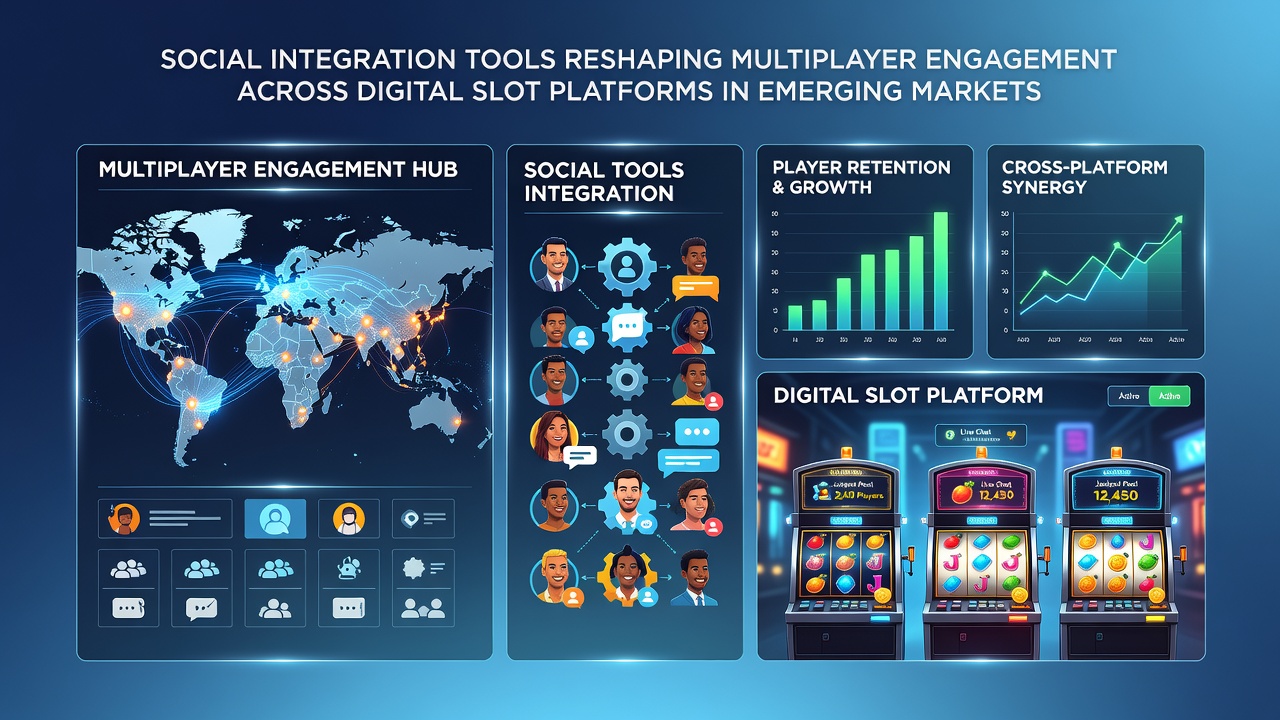
Digital slot platforms in emerging regions have incorporated social integration tools at a steady pace since 2024, and these additions continue to alter how players interact during sessions. Features such as real-time chat, shared leaderboards, and collaborative bonus rounds connect users who might otherwise play in isolation, while data from late 2026 shows increased session lengths in markets across Southeast Asia, Latin America, and parts of Africa.
Core Features Driving Multiplayer Shifts
Platforms now embed tools that let users form groups, compete in time-limited events, and share achievements directly within the game interface. In Indonesia and Brazil, operators rolled out guild systems during 2025 that reward collective wins, and participation rates climbed through the first three quarters of 2026. Voice chat modules appeared in several African markets around the same period, allowing players to coordinate spins or discuss strategies without leaving the app. These elements sit alongside traditional slot mechanics rather than replacing them, yet they create layers of interaction that keep users returning.
Leaderboards update live across regional servers, and players in one city can see their standing against others hundreds of kilometers away. Tournaments run daily or weekly, with entry tied to standard wager amounts, and prize pools often include both credits and cosmetic items. Observers note that these structures reduce the solitary feel of spinning reels while maintaining the core random number generator framework that defines slot play.
Regional Adoption Patterns Through November 2026
Markets in Southeast Asia adopted social layers earlier than many Latin American counterparts, partly because mobile penetration rates already exceeded 80 percent in several countries by 2025. Indonesia reported a 22 percent rise in daily active users on platforms that added chat and group features, according to figures released in November 2026. In contrast, operators in Nigeria and Kenya introduced similar tools more gradually, focusing first on low-bandwidth versions that function over 3G connections before expanding to richer media options.
Brazilian platforms leaned into cross-platform sharing, letting players post results to external social networks while keeping core gameplay inside licensed environments. This approach aligned with local data-protection rules that took effect in 2025. Across these regions, integration tools appear most effective when they operate in the local language and respect cultural preferences around group versus individual play.
Technical and Regulatory Considerations
Developers must balance social features with existing fairness certifications, and regulators in multiple jurisdictions now require separate audits for chat moderation systems and leaderboard algorithms. In November 2026, updates from the Philippine Amusement and Gaming Corporation outlined new guidelines for real-time interaction tools, emphasizing age verification within group functions. Similar frameworks exist in South Africa, where the National Gambling Board reviews social components during license renewals.
Bandwidth limitations still shape design choices in rural areas of emerging regions, so many platforms offer text-only chat alongside optional video elements. Encryption standards meet international benchmarks, and operators route data through regional servers to reduce latency. These technical decisions directly influence how smoothly multiplayer elements function on everyday devices.
Impact on Player Retention and Platform Metrics
Retention data collected through October 2026 indicates that users who join at least one social feature show higher return rates than those who play solo. One study from an academic team at the University of Cape Town tracked activity across three African platforms and found that group-event participants logged 35 percent more sessions over a six-month window. Platforms that added these tools also reported lower churn during promotional periods, because shared events create recurring reasons to log in beyond individual bonuses.
Payment success rates remain tied to the same gateways used for standard deposits, yet social features sometimes bundle micro-transactions for group entries or cosmetic upgrades. Transaction logs from November 2026 show modest increases in these optional purchases in markets where social play has become common.
Future Trajectories for Integration Tools
Operators continue testing augmented-reality overlays that let players see avatars of others at virtual tables, and several pilot programs launched in Brazil and Thailand during 2026. Regulatory bodies watch these experiments closely, requiring clear separation between chance-based outcomes and social presentation layers. Industry associations in Asia and Africa have begun sharing best-practice documents on moderation and data handling to support consistent rollout across borders.
Conclusion
Social integration tools now form a measurable part of digital slot operations in emerging regions, and platform metrics through November 2026 reflect steady growth in engagement where these features operate. Regional differences in infrastructure and regulation continue to guide implementation speed, while core mechanics stay anchored in certified random outcomes. The pattern shows platforms adapting established social mechanics to local conditions rather than importing uniform solutions from mature markets.